
Simple Habits for Better Alignment: Everyday Tips for a Healthier Posture

Introduction
How often do you think about your posture? If you’re like most people, probably not much—until something starts to hurt. Neck pain after a long day at your desk. Lower back aches that won’t quit. Shoulders that seem permanently hunched forward.
Modern life isn’t kind to our bodies. We spend hours slouched over phones, slumped in office chairs, and curled up on couches. Over time, these positions become habits, and those habits reshape how we hold ourselves. The result? Poor alignment that affects not just how we look, but how we feel and function.
The good news is that better alignment doesn’t require expensive equipment or hours at the gym. Simple daily habits can gradually retrain your body to find its natural, balanced position. This article will walk you through practical, easy-to-follow habits for better alignment that you can start practicing today.
What Is Body Alignment and Why Does It Matter?
Body alignment refers to how the different parts of your body line up with each other. When you have good alignment, your bones, joints, and muscles work together efficiently. Your head sits balanced over your spine, your spine maintains its natural curves, and your weight distributes evenly through your hips, knees, and feet.
Think of your body like a stack of building blocks. When the blocks are neatly stacked, the structure is stable and strong. But if one block shifts out of place, the whole tower becomes unstable. Your body works the same way.
Good alignment matters for several reasons. First, it reduces strain on your muscles and joints. When everything lines up properly, your body doesn’t have to work as hard to hold you upright. Second, proper alignment allows for better breathing and circulation. A slouched posture compresses your lungs and organs. Third, good alignment can prevent pain and injury over time. Many common aches—headaches, back pain, hip discomfort—trace back to alignment issues.
Beyond the physical benefits, how you carry yourself affects your energy levels, confidence, and even mood. Standing tall isn’t just about looking good—it’s about feeling good too.
Common Causes of Poor Alignment
Understanding what throws your body out of alignment helps you address the root causes. Here are some everyday culprits that contribute to posture problems:
Prolonged sitting is one of the biggest offenders in modern life. When you sit for hours, especially in chairs that don’t support your spine properly, your muscles adapt to that position. Hip flexors shorten, glutes weaken, and your upper back rounds forward.
Phone and computer use encourages what experts call “tech neck”—that forward head position we adopt when looking down at screens. For every inch your head moves forward, it adds roughly ten pounds of pressure on your neck and spine.
Weak core muscles can’t properly support your spine. Your core isn’t just your abs—it includes all the muscles around your trunk that work together to stabilize your body. When these muscles are weak, other areas compensate, leading to imbalances.
Tight muscles pull your body out of alignment. Tight chest muscles pull shoulders forward. Tight hip flexors tilt your pelvis. Tight hamstrings affect your lower back. These imbalances create a chain reaction throughout your body.
Carrying heavy bags on one shoulder repeatedly creates uneven stress. Your body adapts by shifting and tilting, which over time becomes your default position.
Wearing unsupportive footwear affects alignment from the ground up. High heels shift your center of gravity forward. Worn-out shoes don’t provide proper support. Even flip-flops can alter how you walk and stand.
Stress and tension cause muscles to tighten, particularly in the neck, shoulders, and jaw. Chronic stress keeps your body in a guarded, contracted state that throws off natural alignment.
Poor sleeping positions matter too. Spending eight hours in an awkward position affects how your body feels and functions during the day.
Signs Your Alignment Needs Attention
Your body often signals when something is off. Here are common signs that your alignment could use some work:
- Frequent headaches, especially tension headaches at the base of your skull
- Neck pain or stiffness that worsens throughout the day
- Rounded shoulders that seem to roll forward
- Upper back pain between your shoulder blades
- Lower back pain or achiness
- One shoulder or hip that appears higher than the other
- Feeling like you’re leaning forward when you stand
- Tight hip flexors or hamstrings
- Jaw tension or TMJ discomfort
- Fatigue that seems disproportionate to your activity level
- Difficulty taking deep breaths
- Clothes that seem to fit unevenly
If several of these resonate with you, focusing on alignment habits may help improve how you feel.
Simple Habits for Better Alignment
Now let’s explore practical habits you can incorporate into your daily routine. Remember, changing alignment patterns takes time. Your body didn’t develop these habits overnight, and it won’t change overnight either. Consistency and patience are key.
Check In With Your Body Throughout the Day
Awareness is the first step toward change. Set gentle reminders on your phone to do quick posture check-ins. When the reminder goes off, notice how you’re holding yourself. Are your shoulders creeping up toward your ears? Is your head jutting forward? Are you slumping?
Simply noticing without judgment helps you catch poor alignment before it becomes painful. Over time, these check-ins become automatic, and you’ll start self-correcting naturally.
Practice the Wall Test
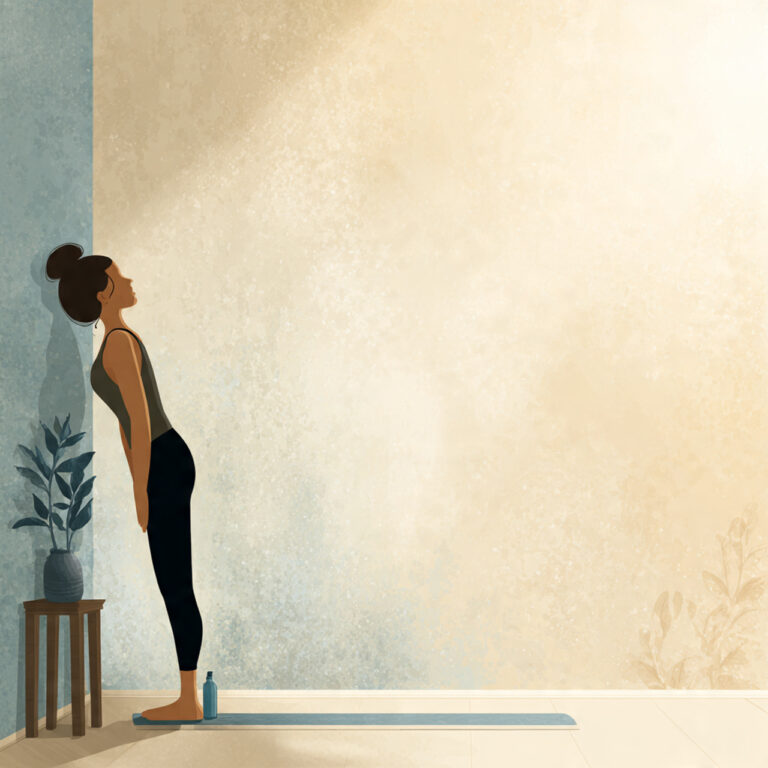
Stand with your back against a wall, heels about two inches from the baseboard. Your head, shoulder blades, and buttocks should all touch the wall. There should be a small curve in your lower back—enough to slide your flat hand through, but not much more.
This position shows you what good alignment feels like. Practice it daily for a minute or two, then try to maintain that feeling as you step away from the wall.
Strengthen Your Core
A strong core provides the foundation for good alignment. But forget doing hundreds of crunches—functional core exercises that engage all your trunk muscles work better for posture.
Planks, bird dogs, dead bugs, and bridges all strengthen the muscles that support your spine. Even five to ten minutes of core work a few times per week can make a noticeable difference. Focus on quality over quantity, keeping your spine neutral during each exercise.
Stretch What’s Tight
Tight muscles pull your body out of alignment, so regular stretching helps restore balance. Key areas to focus on include your chest, hip flexors, hamstrings, and the front of your neck.
A simple doorway chest stretch opens up rounded shoulders. Hip flexor stretches counteract the effects of sitting. Gentle neck stretches relieve tension from looking at screens. Hold each stretch for thirty seconds to a minute, breathing deeply and never forcing.
Set Up Your Workspace Properly
If you work at a desk, your setup significantly impacts your alignment. Your monitor should be at eye level so you don’t look down. Your keyboard and mouse should allow your elbows to rest at roughly ninety degrees. Your feet should rest flat on the floor or a footrest.
Consider your chair height and back support. If your chair isn’t great, a small lumbar roll or rolled-up towel in the curve of your lower back can help. Small adjustments to your workspace can prevent hours of strain each day.
Take Movement Breaks
The human body isn’t designed to stay in one position for hours. Set a timer to remind yourself to move every thirty to sixty minutes. Stand up, walk around, stretch, or simply shift positions.
Even brief movement breaks help reset your posture and prevent the stiffness that comes from staying static too long. A quick walk to refill your water bottle counts.
Mind Your Phone Posture
Instead of dropping your head to look at your phone, bring your phone up to eye level. Yes, it feels awkward at first, and your arms might get tired. But it saves your neck from enormous strain.
When you must look down, try hinging at your hips or lowering your eyes rather than bending your neck forward. Being mindful of phone posture alone can significantly reduce neck and upper back pain.
Sleep in Supportive Positions
How you sleep affects your alignment. Back sleeping with a pillow under your knees keeps your spine relatively neutral. Side sleeping with a pillow between your knees prevents your top leg from pulling your spine out of alignment.
Stomach sleeping tends to be hardest on alignment because it forces your neck to rotate and can arch your lower back. If you’re a stomach sleeper, gradually transitioning to your side may help.
Your pillow matters too. It should support your neck’s natural curve, keeping your head aligned with your spine—not propped too high or sinking too low.
Strengthen Your Upper Back
Weak upper back muscles contribute to rounded shoulders and forward head posture. Exercises that target this area help pull your shoulders back into proper position.
Rows, reverse flies, and face pulls all strengthen the muscles between your shoulder blades. Resistance bands make these exercises accessible at home without needing a full gym setup.
Practice Diaphragmatic Breathing
Shallow chest breathing reinforces poor posture, while deep belly breathing encourages proper alignment. When you breathe into your diaphragm, your core engages naturally and your ribcage expands properly.
Practice placing one hand on your chest and one on your belly. As you breathe in, the hand on your belly should rise while the hand on your chest stays relatively still. This breathing pattern helps reset your nervous system and supports good posture from the inside out.
Walk More—and Walk Mindfully
Walking is one of the best things you can do for alignment. It engages muscles throughout your body, counteracts the effects of sitting, and encourages natural movement patterns.
When you walk, think about standing tall with your gaze forward. Let your arms swing naturally. Avoid looking down at your phone while walking. Even a ten-minute daily walk with attention to posture reinforces good alignment habits.
Release Tension Before It Builds
Tension in your neck, shoulders, and jaw throws off alignment. Simple self-massage techniques can help release tight spots before they become problems.
Roll a tennis ball against a wall to massage your upper back. Gently massage your jaw muscles if you tend to clench. Shrug your shoulders up to your ears, hold, and release to let go of accumulated tension.
What Helps and What to Avoid
Habits That Help
- Regular movement and stretching throughout the day
- Strengthening exercises for core and upper back
- Proper workspace ergonomics
- Supportive footwear for daily activities
- Sleeping in positions that support spinal alignment
- Body awareness and regular posture check-ins
- Deep diaphragmatic breathing
- Carrying bags evenly or using backpacks with both straps
- Taking breaks from prolonged sitting or standing
- Staying hydrated to keep muscles and joints healthy
Habits to Avoid
- Sitting or standing in one position for hours
- Looking down at your phone for extended periods
- Sleeping on your stomach regularly
- Wearing high heels or unsupportive shoes daily
- Carrying heavy bags on one shoulder
- Ignoring pain or discomfort signals from your body
- Slouching on soft couches for long periods
- Holding your phone between your ear and shoulder
- Crossing your legs habitually when sitting
- Overcorrecting by forcing an unnaturally rigid posture
When to See a Professional
While simple habits help many people improve their alignment, some situations call for professional guidance. Consider seeing a healthcare provider, physical therapist, or chiropractor if:
- You have persistent pain that doesn’t improve with self-care
- You’ve experienced an injury affecting your spine or joints
- You notice significant changes in your posture or gait
- Numbness, tingling, or weakness accompanies your discomfort
- Your alignment issues interfere with daily activities
- You want personalized exercises and guidance for your specific needs
- You have a condition like scoliosis or other spinal issues
A professional can assess your individual alignment patterns and create a targeted plan to address your specific imbalances.
Frequently Asked Questions
How long does it take to improve posture?
There’s no one-size-fits-all timeline. Some people notice improvements in comfort within a few weeks of practicing better habits. However, truly changing ingrained postural patterns typically takes several months of consistent effort. Your body needs time to strengthen weak muscles, lengthen tight ones, and develop new movement habits. Be patient and focus on progress rather than perfection.
Can bad posture be fully corrected?
For most people, yes—alignment can significantly improve with consistent effort. However, the degree of correction depends on factors like how long you’ve had poor posture, your age, and any underlying structural issues. While you may not achieve textbook-perfect alignment, most people can make meaningful improvements that reduce pain and improve function.
Is it bad to crack your own back or neck?
Occasional self-cracking isn’t usually harmful for most people, though it doesn’t address the underlying cause of tightness or misalignment. However, forceful or frequent self-manipulation can potentially cause problems. If you constantly feel the need to crack your back or neck, it may indicate an alignment issue worth addressing with proper exercises or professional help.
Does posture really affect mood and energy?
Research suggests yes. Studies have found links between posture and psychological states. Slouched postures are associated with lower energy and more negative emotions, while upright postures correlate with higher energy and more positive feelings. While posture isn’t a cure for mental health issues, how you carry yourself does influence how you feel.
Are posture corrector devices worth it?
Posture corrector braces and devices can serve as helpful reminders to sit or stand straighter. However, they shouldn’t be relied upon as a long-term solution. Wearing a device without also strengthening the muscles that support good posture means you’ll likely return to old habits once the device comes off. Think of them as a training tool rather than a fix.
Conclusion
Better alignment isn’t about standing at rigid attention or achieving some perfect posture ideal. It’s about finding a balanced, comfortable position that allows your body to function well and feel good. Small, simple habits practiced consistently can gradually reshape how you carry yourself.
Start where you are. Pick one or two habits from this article that feel manageable and build from there. Set reminders to check in with your body. Stretch what’s tight and strengthen what’s weak. Be mindful of how you sit, stand, and move throughout your day.
Your body is remarkably adaptable. The same quality that allowed it to develop poor alignment habits means it can develop better ones too. With patience and consistency, you can build simple habits for better alignment that support you for years to come.
Medical Disclaimer: This article is for informational purposes only and is not medical advice. It is not intended to diagnose, treat, cure, or prevent any condition. Always consult a healthcare professional, physical therapist, or chiropractor if you have persistent pain, injuries, or underlying health conditions affecting your alignment.